
How to Hide Thinning Hair Naturally: 2026 Guide
Table of Contents
- Why Natural Hair Camouflage Starts With Scalp Health
- Strategic Hairstyling Hacks to Hide Thinning Hair
- Hairline Coverage Powder Benefits for Instant Results
- Natural Remedies for Hair Thinning That Support Density
- Daily Scalp Massage and Essential Oil Routines
- What to Avoid When Trying to Hide Thinning Hair
- Building Confidence While You Address Thinning Hair
- Frequently Asked Questions
Last Updated: September 6, 2026
Learning how to hide thinning hair naturally often feels like a choice between quick cosmetic fixes and long-term treatments that take months to show results. The good news is that you don't have to pick just one. A layered approach, combining instant camouflage with consistent scalp care, offers the most realistic path to feeling confident while your hair density improves. A layered approach, combining instant camouflage with consistent scalp care, offers the most realistic path to feeling confident while your hair density improves. The most effective strategies tackle the visible signs of thinning and the underlying scalp health at the same time.
Hair thinning is a deeply personal experience that affects far more than your reflection. It can shape how you introduce yourself in meetings, how you feel in photos, and how comfortable you are in your own skin. Understanding that the emotional weight of hair loss is just as significant as the physical change is the first step toward a sustainable routine. Below, we will show you exactly how to combine styling techniques, natural remedies, and high-performance coverage products to create a routine that works for your specific hair type and texture.
Why Natural Hair Camouflage Starts With Scalp Health
Healthy hair cannot grow from an unhealthy foundation. The scalp is living skin with its own microbiome, oil production, and circulation, and it needs the same care you give the rest of your complexion. Many people focus entirely on the strands they can see, ignoring the follicles beneath, where hair growth actually begins. This is why scalp health is the essential starting point for any natural approach to hiding thinning hair.
A balanced scalp environment supports the natural hair cycle, which includes growth, transition, and resting phases. When the scalp becomes inflamed, congested, or excessively dry, the hair cycle can be disrupted, leading to thinning strands and increased hair breakage. Targeted scalp care that cleanses without stripping natural oils helps maintain the right conditions for follicles to function properly. Look for products that respect your skin's barrier rather than those that leave your scalp feeling tight or itchy.
Strategic Hairstyling Hacks to Hide Thinning Hair
The best hairstyles for thinning hair work with your natural texture rather than against it. A common mistake is trying to hide hair loss by growing hair longer, which often makes thinning more obvious as strands become weighed down and flat against the scalp. Shorter, layered cuts generally create more movement and volume, making it harder for the eye to detect sparse areas.
Consider these styling adjustments that create the illusion of fuller hair:
- Change your parting: A deep side part adds instant volume at the root and breaks up the visibility of a widening centre parting. Zig-zag partings also help disguise hairline thinning.
- Add layers: Texturised layers give the appearance of density by creating depth, especially around the crown and nape.
- Use volumising products: Lightweight mousses and root-lifting sprays add lift at the follicle opening without weighing hair down.
- Blow-dry upside down: This simple technique lifts the roots away from the scalp, creating natural volume that lasts through the day.
What most guides miss is that product choice matters as much as the cut. Heavy waxes and creams can make thinning strands clump together, exposing the scalp further. A matte texturising powder applied at the roots can create grip and fullness, but it must be washed out thoroughly to avoid clogging follicles. Hair styling hacks are only effective when they do not compromise the health of the hair you still have.
Hairline Coverage Powder Benefits for Instant Results
Hairline coverage powder benefits anyone who wants immediate, natural-looking density without waiting for regrowth. These powders work by depositing tiny coloured fibres onto the scalp and surrounding hairs, instantly creating the appearance of a fuller hairline and covering bald spots. The effect is immediate, which makes it an ideal solution for days when you need extra confidence.
The key to a realistic finish is shade matching and application technique. Choose a powder that matches the darkest shade of your natural hair, as lighter shades can appear chalky against the scalp. Apply in short, pressing motions rather than sweeping strokes, focusing on the areas where the scalp is most visible through the hair.
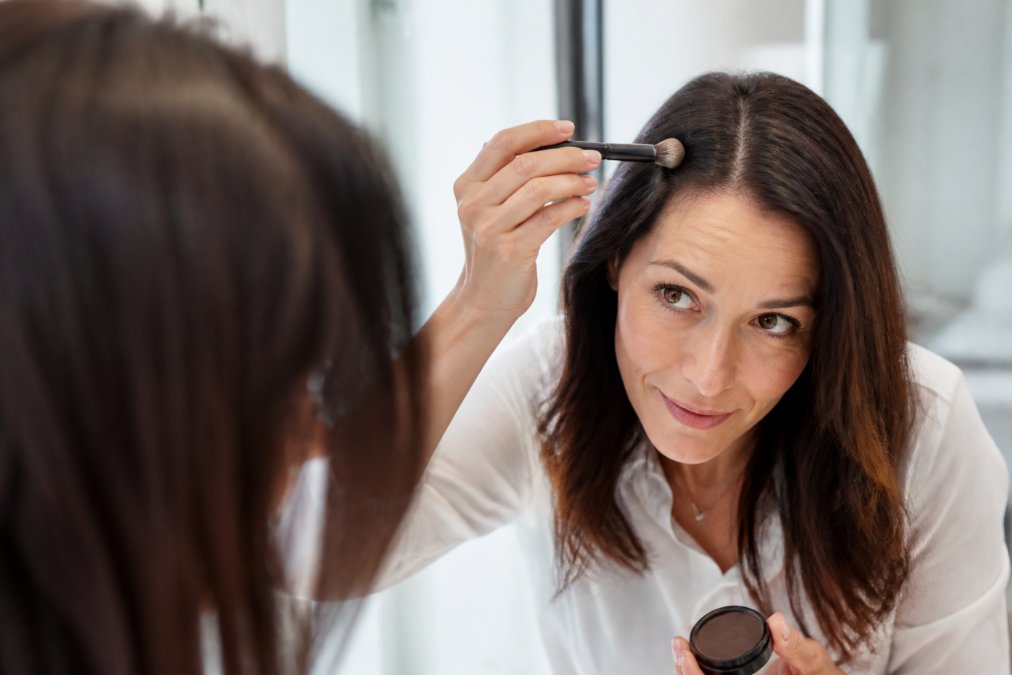
A high-performance hairline coverage powder is a styling essential because it is versatile and forgiving. It can camouflage thinning hair around the temples, disguise a widening parting, and add density to the crown. For those concerned about sensitive scalps, mineral-based powders are generally gentle, but always patch-test a new product on a small area first.
Natural Remedies for Hair Thinning That Support Density
Natural remedies for hair thinning focus on supporting the conditions your hair needs to grow, rather than promising overnight regrowth. While no single ingredient can reverse genetic hair loss, certain natural compounds are known to support scalp health and hair density when used consistently. The distinction matters: expecting a miracle from a single oil will lead to disappointment, but building a routine around proven natural ingredients can make a measurable difference over time.
Moroccan argan oil is rich in fatty acids and vitamin E, which help nourish the scalp and condition thinning strands, reducing hair breakage. Tea tree essence is valued for its cleansing properties, helping to keep the scalp free from buildup that can hinder follicle function. When combined in a well-formulated product, these ingredients support a healthy environment for hair growth without the harshness of some chemical alternatives.
Hair supplements can also play a supporting role, particularly when dietary intake is lacking. Key nutrients for hair health include iron, zinc, vitamin D, and B vitamins. Rather than guessing, consider a blood test to identify any genuine deficiencies, as supplementing what you already have in adequate amounts will not produce additional growth. According to the Australian Government's health guidance on nutrition, a balanced diet is the foundation of overall health, including hair health, and supplements should complement rather than replace good eating habits.
Daily Scalp Massage and Essential Oil Routines
Scalp massage is one of the most underrated tools for supporting hair density, and it costs nothing but a few minutes of your day. Massaging the scalp increases blood flow to the follicles, which helps deliver oxygen and nutrients needed for healthy hair growth. It also helps relieve tension, a factor that can contribute to hair loss in some individuals.
To build a simple daily routine:
- Warm up the scalp: Spend one minute gently warming the scalp with your fingertips using small circular motions.
- Apply a carrier oil: If using essential oils, always dilute them in a carrier oil such as argan or jojoba oil to prevent irritation.
- Massage for 3-5 minutes: Use your fingertips, not your nails, to massage the entire scalp, focusing on areas of visible thinning.
- Leave it in or rinse: Depending on the product, either leave the oil to absorb or rinse it out after 20-30 minutes.
Essential oils like rosemary and peppermint have been studied for their potential to support follicle stimulation, though results vary by individual. The evidence base is growing, but it is not a guaranteed cure. What is certain is that regular massage improves scalp condition and reduces stress, both of which support healthier hair over time. Consistency matters more than intensity; five minutes daily will outperform an hour once a month.
What to Avoid When Trying to Hide Thinning Hair
Some habits work against your efforts to hide thinning hair, no matter how careful your styling routine is. The most damaging is relying on tight hairstyles that pull at the roots. Ponytails, buns, and braids worn tightly can cause traction alopecia, a form of hair loss that is entirely preventable by changing how you style your hair.
Heat styling is another contributor to hair breakage. Frequent use of straighteners and curling irons at high temperatures weakens the hair shaft, making thinning strands more prone to snapping. If you use heat tools, always apply a heat protectant spray and keep the temperature as low as possible. Air-drying where feasible is even gentler on fragile hair.
Harsh chemical treatments, including some relaxers and perms, can also compromise hair density over time. If you colour your hair, consider gentler options and extend the time between treatments. Finally, be cautious about the products you choose. Some hair thickening products contain ingredients that can build up on the scalp and cause irritation. The Australian Competition and Consumer Commission guidance on cosmetic safety advises consumers to be aware of what they apply to their skin and hair, and to report any adverse reactions.
Building Confidence While You Address Thinning Hair
The psychological impact of hair thinning is often the hardest part to manage, yet it receives the least attention in most guides. Feeling self-conscious about your hair can affect social situations, professional opportunities, and intimate relationships. Acknowledging that this is a real and valid emotional experience is the first step toward regaining control.
Confidence comes from knowing you have a plan. When you have reliable styling techniques, effective coverage products, and a consistent scalp care routine, you stop feeling helpless about the situation. The process of taking action, however small, is itself a powerful antidote to the anxiety that hair loss can create. You are no longer waiting for something to happen to you; you are actively managing your appearance and your health.
Budget-friendly DIY alternatives exist for many aspects of hair care, from homemade scalp scrubs to simple styling changes that cost nothing. You do not need an expensive product lineup to see improvements, though investing in quality formulations can make the routine more effective and enjoyable. The goal is to build a sustainable practice that fits your lifestyle and budget, because consistency is what delivers results.
As you build your routine, remember that you are not alone in this experience. Hair loss affects a significant portion of the population, regardless of gender. The Australian Institute of Health and Welfare overview of skin and hair conditions highlights that skin and hair conditions are among the most common health concerns Australians manage, which underscores how widespread these worries are. Normalising the conversation around thinning hair can lighten the emotional load considerably.
The most effective approach to hiding thinning hair is one that combines immediate solutions with long-term care. Start with a hairstyle that flatters your current density, use a high-quality hairline coverage powder for instant confidence, and pair these with a scalp care routine that supports healthier growth over time. Kooswalla Australia offers a comprehensive range designed to help, including anti-hair loss complexes infused with Moroccan argan oil and tea tree essence, and a high-performance hairline coverage powder that instantly disguises thinning areas and bald spots. Get started with Kooswalla Australia and build a routine that restores both your hair's vitality and your confidence.
Frequently Asked Questions
How can I disguise thinning hair without harsh chemicals?
Start with strategic styling: a side part adds volume, while textured cuts make strands appear denser. Hair fibres made from natural plant fibres are a chemical-free option that statically bonds to existing hair for instant coverage. For scalp care, massage with oils like rosemary or peppermint, which have shown promise for follicle stimulation. Always patch-test new products, especially if your scalp is sensitive, and focus on gentle, sulphate-free cleansers to avoid stripping natural oils.
Do hairline coverage powders work on bald spots?
Yes, hairline coverage powder is designed to camouflage exposed scalp and thinning areas, including bald spots. The fine, coloured particles bond to the hair and scalp, reducing contrast and creating the appearance of fuller density. Benefits include instant application and a natural matte finish. It is a temporary cosmetic solution, not a treatment, so pair it with a regrowth routine for long-term results.
What are the best hairstyles for thinning hair?
The best hairstyles for thinning hair focus on creating volume and reducing contrast. A blunt bob or a cropped pixie cut removes weight, making strands look thicker. Layers add movement, which can disguise sparse ends. For men, a textured crop or a short fringe softens a receding hairline. Avoid slicked-back styles and harsh centre parts, which expose the scalp. Use volumising mousse at the roots before blow-drying to lift hair away from the scalp.
How long before natural remedies for hair thinning show results?
Natural remedies for hair thinning require patience. The hair cycle means visible changes typically take 3 to 6 months of consistent use. Consistent scalp massage, essential oil application, and dietary adjustments address follicle health from the inside out. While you wait, use styling hacks and hairline coverage powder for immediate cosmetic coverage. If you have significant thinning or an inflamed scalp, consult a dermatologist or trichologist to rule out underlying conditions.